
Through the Gate of Ayin: Freedom without Limit
Jewish meditations on Emptiness
An 8-part Series for Experienced Practitioners
With Zac Newman
On Zoom
“Wisdom comes from ayin”.
Job 28:12
“The final aim of Torah and wisdom…is to attain the complete ayin. …the very source of wisdom is ayin, ayin is its very root…from ayin comes the straight line which encompasses peace and blessing.”
Rabbi Menachem Mendel of Vitebsk, Pri HaAretz
Ayin, emptiness, has ancient roots in our tradition. For the medieval Kabbalists it was the boundless ground from which the first manifestations of reality emerged. Eighteenth century Hasidic masters such as the Maggid of Mezritch, Rabbi Levi Yitzchak of Berdichev, and Rabbi Menachem Mendel of Vitebsk showed that ayin can be known and embodied in the midst of daily life, and that doing so is a path to a most profound fulfillment and freedom.
Cultivating the perspective of ayin/emptiness offers gifts that are limitless, such as:
Relief, peace and stillness
Clarity, understanding and insight
Wholeness, integration, vitality and unobstructed flow
Fearlessness and love
Reckoning with ayin can yield a treasure of immeasurable proportions, often far beyond what we may have expected or experienced elsewhere.
But what actually is it that we are practicing here?
It is difficult to put ayin coherently into words, for reasons that become clear when we explore the emptiness of language itself.
As a starting point we will say that ayin is a verb: that the essence of these practices is not a fact about reality but a movement of unbinding and flow, a stillness in not having to grasp or cling, a willingness and ever-deepening trust in softening all the way down, through body and heart and throughout the expanse of awareness itself. The primary goal of the exploration is to enable ever deeper ease, ok-ness and love.

“When a person goes from one level to the next, and still wants to go further, then they have no limits, and are called a perspective of the Infinite.”
Maggid of Mezritch, Ohr Torah, 72a
Course Outline
Class 1: What is emptiness?
Classes 2-7 will each introduce one aspect of experience that we can pay attention to and practice with in order to learn more about the territory of ayin. Each class will include text study, practice and discussion. We will move between intentionally cultivating a certain view, and then resting in and enjoying the fruits.
Class 2: Impermanence
We practice to see up close the radical change that is always happening. This reveals the futility of our habits of grasping and clinging. As we drop these habits, we immediately become more open, and we receive more deeply the fullness and richness of the present moment.
Class 3: Non-solidity
We practice to see and absorb that experience is not entirely solid. We learn that there are always gaps, spaces, openings. When we are in touch with non-solidity, we are never trapped or stuck.
Class 4: Insufficiency
We practice to see that no experience is entirely sufficient. No achievement, state or insight will solve everything once and for all. With this perspective, we start to release the need for anything to provide that lasting satisfaction and, in doing so, find freedom. We learn that what we desire and long for is no longer a ‘must have’, though it may still be beautiful and worthy of our effort and devotion.
Class 5: The emptiness of language
We tangle ourselves up in words. We shame ourselves and others with them. Examining what words are, we find ayin here too. Words don’t carry meaning as concretely or definitely as we often imagine. Then we can be precise and careful with our words but not bound by them. Words can open up insight, but also don’t block other ways of experiencing that are beyond words.
Class 6: Mystery
However carefully we refine our explanations and understanding of ourselves and our world, there will always remain the possibility that we are somehow mistaken. When we see that this is ineradicable and nothing personal we can come to love mystery as an eternal refuge, which in no way squashes or blurs our efforts at knowledge but always holds them in a wider space.
Class 7: Non-separateness
The culmination of ayin is connection and love. We see that everything we fear and everything that holds us back is riddled with holes. Then, we are able to really be here, in relationshipsrelationship, in the world, in commitments and in life, and to find the space that we need right here too. Eventually ayin shows us that all the obstacles are empty and the path of love is unobstructed.
Class 8: What is emptiness?
Who is this for?
This series is open to all, from beginner to advanced meditators, and welcomes all kinds of relationships with Jewish spirituality and life - whether you’re curious, deeply aligned, or intensely grappling. The series is designed to provide a welcoming space to connect with others on a shared path of exploration and growth, and will offer encouragement and support for your meditative journey within a Jewish spiritual framework.
What to expect and how you’ll be supported
Sessions will be 90 minutes each. Recordings will also be sent out weekly to allow for self-paced learning and participation. In addition to the weekly sessions, participants will also have the option to join a WhatsApp group to receive ongoing support in our practice together in between sessions.
Meet Your Teacher
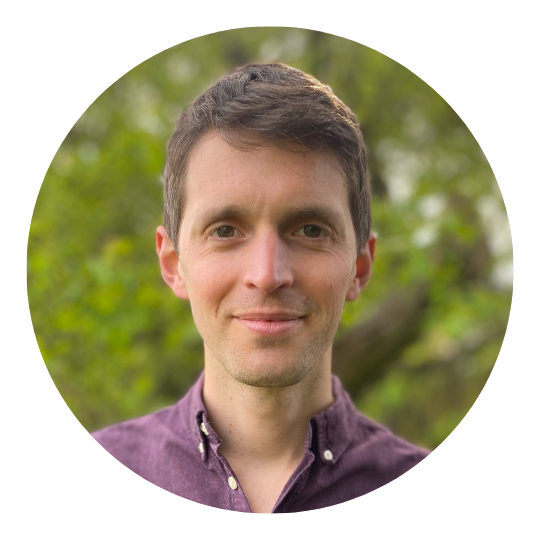
Zac Newman
Zac has been practicing mindfulness since 2008 and teaching practice since 2013. He trained to teach mindfulness through the Centre for Mindfulness Research and Practice at Bangor University. Zac's responsibilities at Or HaLev include teaching, supervising our curriculum, mentoring other teachers and directing our English online program.
Prior to his role at Or HaLev, he was the Community Director of HaMakom, the UK-based Jewish meditation organisation. Zac is a long-standing student of religious studies and psychotherapy. He is a rabbinical student in the ALEPH Ordination Program, and he is continually interested in how we can realize the wisdom of our tradition and the goodness of our lives.
“Zac is very skillful. He is responsive to individuals and gives permission to be with or divert from the group. He exudes confidence and gentleness with the practices, poems, references to Jewish text, and chanting. I enjoyed the variety of approaches and got useful strategies to apply in challenging moments. I am deeply grateful. For the first time, I feel like I have a place of belonging in the Jewish world.” - Rena T.
We want to make this series accessible to anyone who wishes to join it. If the scholarship rate is financially unfeasible for you, please write to zacn@orhalev.org, with a brief explanation of why you’d like to join us and your financial needs, and we will do our best to make the series accessible to you.
We Are Here
Any questions? Please email Or HaLev Program Director, Zac Newman, at zacn@orhalev.org
